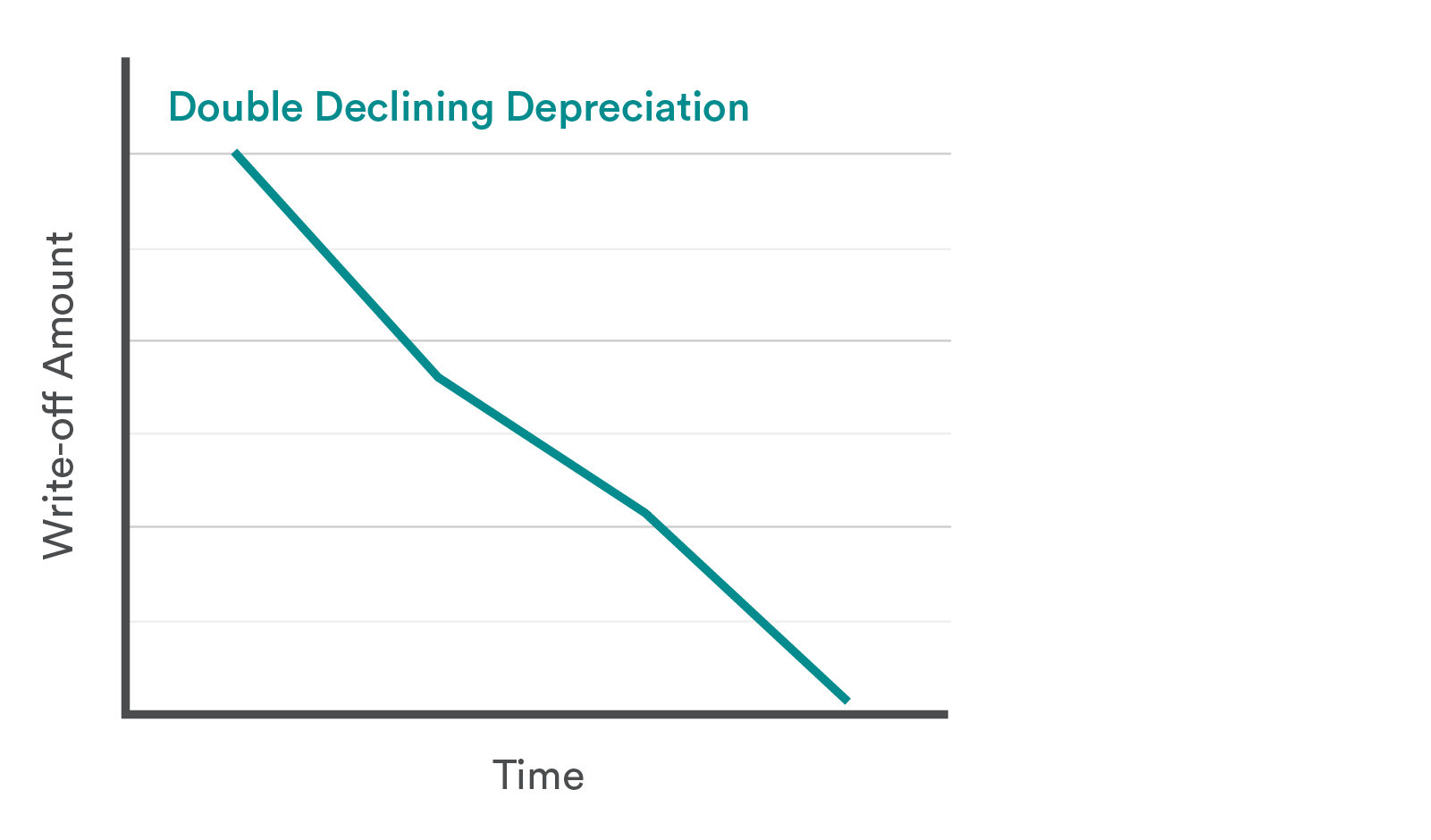
But as time goes by, the fixed asset may experience problems due to wear and tear, which would result in repairs and maintenance costs. That’s why depreciation expense is lower in the later years because of the fixed asset’s decreased efficiency and high maintenance cost. It is important to understand that although the charging of depreciation affects the net income (and therefore the amount attributable to shareholders) of a business, it does not involve the movement of cash.
Understanding DDB Depreciation
Declining balance is a method used to depreciate assets where the depreciation expense is higher in the beginning of the useful life of the asset. The declining balance is considered as an accelerated depreciation method, unlike the straight-line method where the depreciation expense is the same amount every year. An asset costing $20,000 has estimated useful life of 5 years and salvage value of $4,500. Calculate the depreciation for the first year of its life using double declining balance method.
When to Use the Declining Balance Method
He has worked as an accountant and consultant for more than 25 years and has built financial models for all types of industries. He has been the CFO or controller of both small and medium sized companies and has run small businesses of his own. He has been a manager and an auditor with Deloitte, a big 4 accountancy firm, and holds a degree from Loughborough University. Usually the calculation gives an answer to a number of decimal places, it is normal to round to the nearest whole percentage, as the salvage value can never be accurately determined. It must be applied where an asset is expected to face technological obsolescence relatively quickly. It results in higher reported profits in the early years of an asset’s life.
What Does the Declining Balance Method Tell You?
- Each year the declining balance depreciation rate is applied to the opening net book value of the asset.
- Based on past experience, the same type of machinery has a useful life of 8 years and is depreciated at a rate of 15%.
- If you want to learn more about fixed asset accounting as a whole, then head to our guide on what fixed asset accounting is, where we discuss the four important things you need to know.
- As a hypothetical example, suppose a business purchased a $30,000 delivery truck, which was expected to last for 10 years.
- DBM has pros and cons and is an ideal method for assets where technological obsolescence is very high.
In this case, the company can calculate decline balance depreciation after it determines the yearly depreciation rate and the net book value of the fixed asset. It’s ideal for assets that quickly lose their value or inevitably become obsolete. This is classically true with computer equipment, cell phones, and other high-tech items that are generally useful earlier on but become less so as new models are brought to market. An accelerated method of depreciation ultimately factors in the phase-out of these assets. Under the double-declining balance method, the book value of the trailer after three years would be $51,200 and the gain on a sale at $80,000 would be $28,800, recorded on the income statement—a large one-time boost.
If the company was using the straight-line depreciation method, the annual depreciation recorded would remain fixed at $4 million each period. Using this new, longer time frame, depreciation will now be $5,250 per year, instead of the original $9,000. That boosts the income statement by $3,750 per year, all else being the same. It also keeps the asset portion of the balance sheet from declining as rapidly, because the book value remains higher. Both of these can make the company appear “better” with larger earnings and a stronger balance sheet.
Calculating the Depreciation Formula for DDB
Accruing tax liabilities in accounting involves recognizing and recording taxes that a company owes but has not yet paid. All methods of depreciation can affect a business’s tax picture and taxes owed. Tickmark, Inc. and its affiliates do not provide legal, tax or accounting advice.
Under this accelerated method, there would have been higher expenses for those three years and, as a result, less net income. This is just one example of how a change in depreciation can affect both the bottom line and the balance sheet. There are four allowable methods for calculating depreciation, and which one a company chooses to use depends on that company’s specific circumstances.
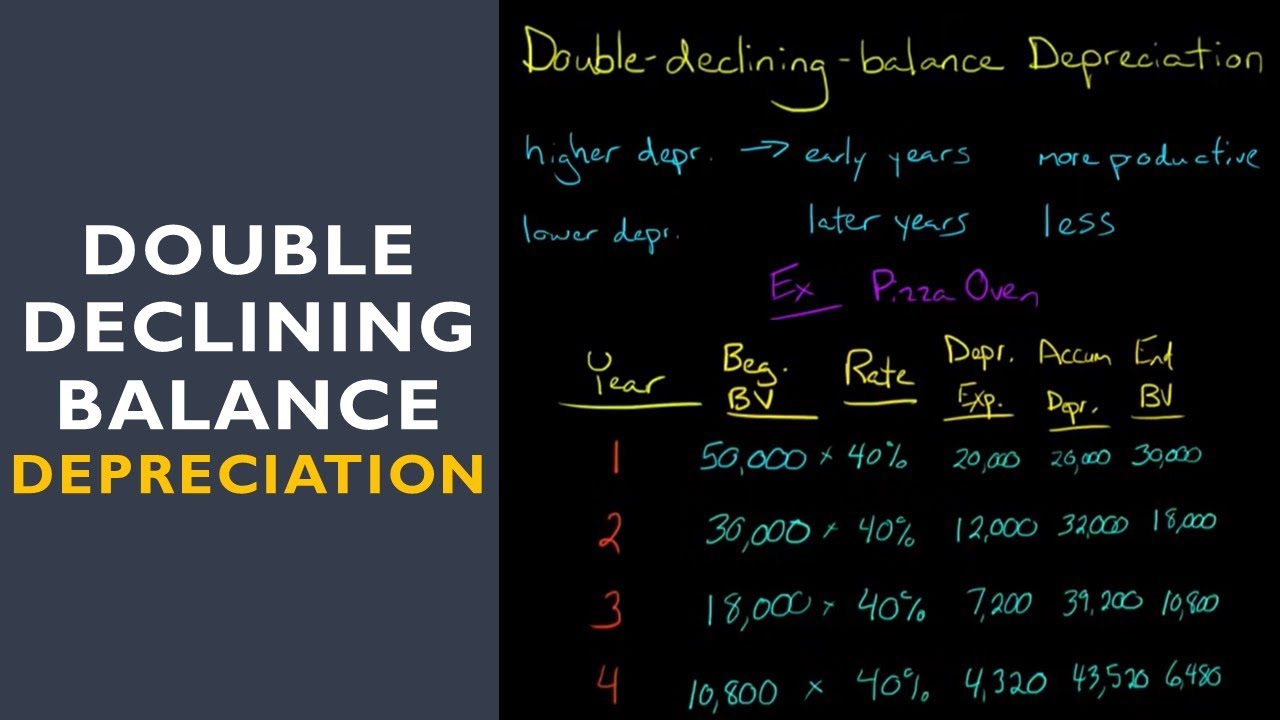
In the above case, after 4 years, the amount of 8,704 will have been charged to the income statement as a depreciation expense. The other side of the depreciation expense is a credit entry to the accumulated depreciation account. This formula is best for companies with assets that lose greater value in the early years and that want larger depreciation deductions sooner. Note that the depreciation in the fifth accounts payable bookkeeper jobs employment and final year is only for $1,480, rather than the $3,240 that would be indicated by the 40% depreciation rate. The reason for the smaller depreciation charge is that Pensive stops any further depreciation once the remaining book value declines to the amount of the estimated salvage value. Depreciation is charged according to the above method if book value is less than the salvage value of the asset.
Depreciation expense under the declining balance is calculated by applying the depreciation rate to the book value of the asset at the start of the period. The declining balance method is a type of accelerated depreciation used to write off depreciation costs earlier in an asset’s life and to minimize tax exposure. With this method, fixed assets depreciate more so early in life rather than evenly over their entire estimated useful life. The double declining balance method (DDB) describes an approach to accounting for the depreciation of fixed assets where the depreciation expense is greater in the initial years of the asset’s assumed useful life.
More commonly, these methods are used to reduce the amount of taxable income in the near term, so that a firm’s tax liability can be pushed out into later periods. Thus, a declining balance method can improve the cash flow of a business by reducing the amount of taxes payable in the short term. The company ABC has the policy to depreciate the machine type of fixed asset using the declining balance depreciation with the rate of 40% per year. The machine is expected to have a $1,000 salvage value at the end of its useful life. Also, this yearly rate of depreciation is usually in line with the industry average. A declining balance method accelerates depreciation so more of an asset’s value can be recorded earlier in its useful life.